
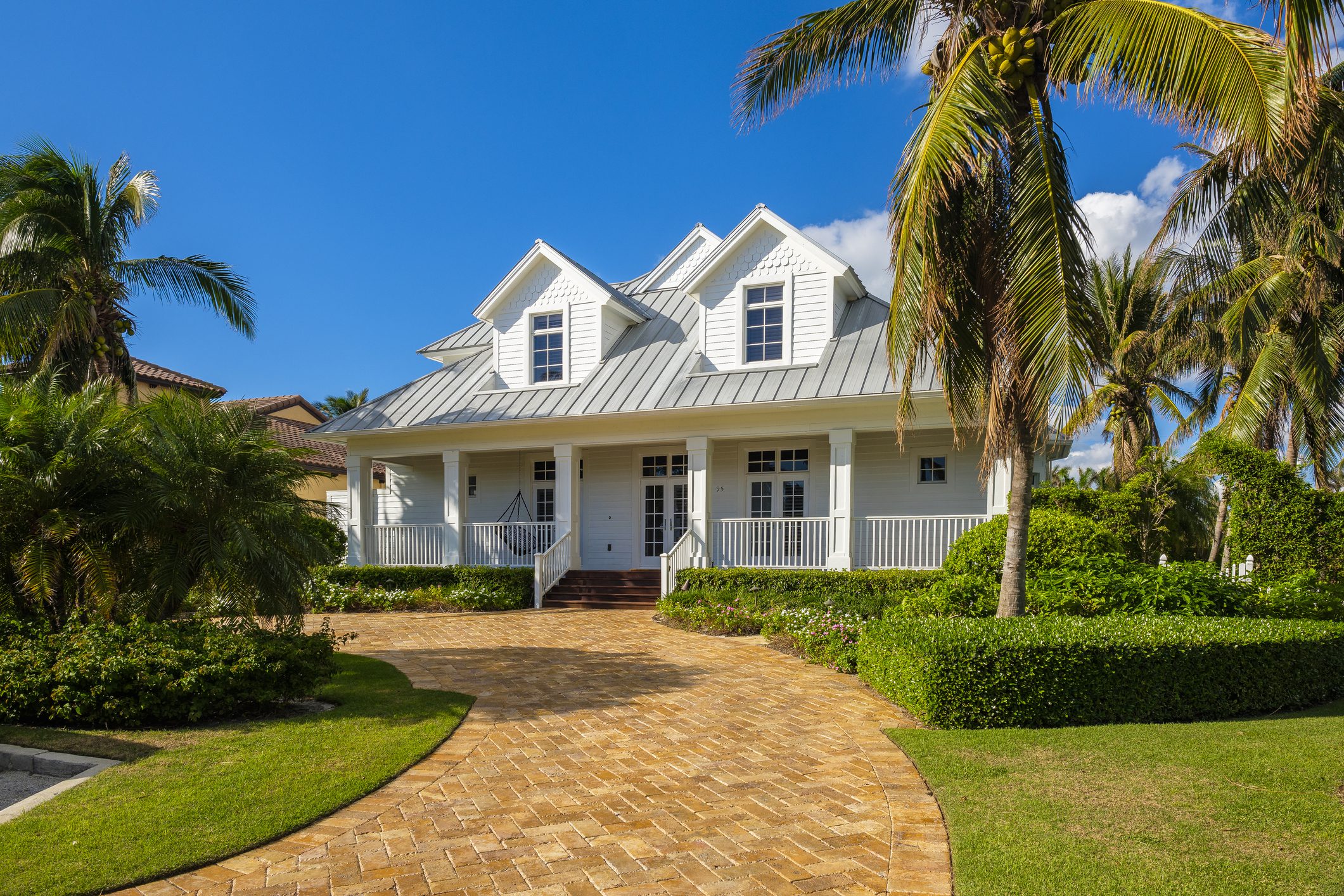
Casey Key is not a typical building site, and it should not be treated like one. A narrow barrier island bordered by the Gulf on one side and the Intracoastal on the other brings a specific set of engineering, permitting, and logistical demands that do not apply the same way even a few miles inland. Understanding barrier island home building requirements on Casey Key is the foundation of every successful project here, and it separates builders who have done this work from those encountering the island for the first time.
This guide covers what actually goes into building on Casey Key at a luxury level: the coastal engineering and material decisions that protect a high-end home over decades, the additional permitting layers that come with waterfront and barrier island construction, the logistical realities of building on a narrow island with limited access, and what to expect from a Casey Key luxury home builder who has done this work before.
Why Casey Key Demands a Different Approach
Barrier islands exist in a state of constant environmental exposure. Salt air accelerates corrosion, storm surge risk shapes elevation and foundation requirements, and wind loads on the Gulf side routinely exceed what standard residential code assumes elsewhere in the county. Any professional working here has to design and build with all of that as a baseline condition, not an exception.
This is also where luxury and resilience intersect rather than compete. A high-end home on Casey Key that ignores coastal engineering realities will look extraordinary for a few years and then start showing the wear that comes from underbuilding for the environment. A Casey Key luxury home builder who takes this seriously treats resilience as part of the luxury experience, not a separate conversation.
Axelle Builders has spent more than 36 years working in exactly these conditions. Review our approach to barrier island construction on Casey Key before comparing anything else.
Coastal Engineering Decisions That Cannot Be Shortcut
Foundation elevation is the first major decision, driven by FEMA flood zone mapping and base flood elevation for the specific parcel. On Casey Key, this often means an elevated structural foundation rather than a standard slab, which affects everything from the architectural profile of the home to how outdoor living spaces connect to grade.
Wind resistance is the second major consideration. Impact-rated windows and doors, engineered roof-to-wall connections, and structural systems rated for the wind speeds mapped for barrier island exposure are not upgrades here. They are baseline requirements. Material selection matters just as much at the finish level. Exterior materials, fasteners, and mechanical equipment on Casey Key need corrosion resistance well beyond typical residential specification, since salt air exposure is constant rather than occasional.
Understanding barrier island home building requirements Casey Key presents starts with these structural decisions, made correctly from the very first design conversation.
Permitting Layers Unique to This Island
Beyond standard county building permits, waterfront and barrier island construction on Casey Key frequently involves additional review. Projects touching seawalls, docks, boat lifts, or shoreline work typically require review from the Florida Department of Environmental Protection and, depending on scope, potentially the Army Corps of Engineers. An experienced team already understands which of these apply to a given project and sequences the permitting process accordingly.
Environmental considerations add another layer. Sections of Casey Key are subject to protections related to coastal habitat and sea turtle nesting season, which can affect construction lighting requirements and, in some cases, timing of exterior work. A Casey Key luxury home builder who has built on the island before factors these requirements into the schedule from the start rather than discovering them mid-project.
Logistics: What Makes Building Here Different in Practice
Casey Key is a narrow island with limited road access, and that reality shapes construction logistics in ways that do not apply on a typical mainland lot. Material delivery, equipment staging, and crew access all require more careful planning, since there is simply less room to work with and fewer alternate routes if something is blocked.
A team who plans for this in advance, sequencing deliveries and coordinating with neighbors and the community when needed, avoids the delays that come from treating island logistics as an afterthought. This is an area where experience specifically on Casey Key, rather than general Southwest Florida experience, tends to make a real difference in how smoothly a project runs.
What Luxury Actually Means in a Casey Key Home
Luxury on Casey Key is expressed differently than it might be inland, largely because the site itself is the primary asset. Waterfront orientation, unobstructed Gulf or bay views, outdoor living spaces designed for near year-round use, and materials that hold up to salt air while still reading as high end are the elements that define a well-executed project.
A skilled Casey Key luxury home builder works closely with architects and designers to make sure the home’s orientation captures the site’s natural advantages, that indoor and outdoor spaces transition seamlessly, and that every material decision balances aesthetic ambition with the durability the environment demands. This is where design vision and coastal engineering have to work together rather than in separate conversations.
Questions to Ask Before Hiring
Ask directly how many projects a professional has completed specifically on Casey Key or comparable barrier islands, since experience on the mainland does not automatically transfer. Ask how they handle DEP and Army Corps coordination for any waterfront elements, and who manages that process. And ask how they plan for limited-access logistics and what contingencies exist if a delivery route is temporarily restricted.
Then ask to see examples of completed projects that are now several years old, and ask how those homes have held up against salt exposure and storm events. A professional confident in their coastal engineering decisions will be glad to show you the long-term results rather than only the day of completion.
What the Timeline Looks Like
Expect a longer runway for permitting than a comparable mainland project, largely due to the additional environmental and waterfront review layers described above. A realistic timeline should separate site evaluation and permitting from actual construction, since the former is often where barrier island projects experience the most variability.
Construction sequencing itself may also move at a different pace due to access logistics, particularly for larger deliveries like structural steel, elevated foundation materials, or dock and seawall components. According to the U.S. Army Corps of Engineers, waterfront construction in sensitive coastal areas requires advance coordination with regulatory agencies, which adds meaningful lead time to any shoreline-adjacent scope. A transparent professional will walk through this honestly rather than quoting a generic timeline borrowed from mainland projects.
Frequently Asked Questions
Why does barrier island construction require different engineering than mainland projects?
Barrier islands face constant salt air exposure, higher wind loads, and elevated storm surge risk compared to inland parcels. Materials, openings, and foundation elevation all have to meet requirements that function as baseline standards rather than upgrades.
Does building on Casey Key require additional permits beyond standard county approval?
Yes, in many cases. Projects involving seawalls, docks, or other shoreline work often require review from the Florida Department of Environmental Protection and potentially the Army Corps of Engineers. An experienced professional will know which permits apply based on the specific scope.
How does limited island access affect the construction schedule?
Casey Key’s narrow footprint and limited road access mean material delivery and equipment staging require more careful planning than on a typical mainland lot. Access constraints planned for in advance rarely cause delays. Those treated as surprises consistently do.
Are there environmental restrictions tied to sea turtle nesting season?
Certain sections of Casey Key are subject to protections related to coastal habitat and nesting season, which can affect exterior lighting requirements and, depending on scope, construction timing. A builder with island experience factors these requirements into the project schedule from the outset.
What should I look for in a portfolio when evaluating a builder?
Look specifically for completed projects on Casey Key or comparable barrier islands rather than general Southwest Florida work, and ask how those homes have performed several years after completion. A Casey Key luxury home builder confident in their coastal engineering will welcome that level of scrutiny.
Building on Casey Key With Axelle Builders
Axelle Builders has spent more than 36 years designing and building custom homes across Southwest Florida. The team has extensive experience in demanding coastal and barrier island environments, including Casey Key. Axelle Builders combines coastal engineering, permitting knowledge, and logistical planning. This approach meets Casey Key’s building requirements without limiting luxury home design.
If you are comparing builders, ask about their barrier island experience first. Then compare their portfolios. Review our services page to understand our process. Explore completed projects in our gallery. Find more building guidance on the Axelle Builders blog.
Planning a project and ready to talk through what this island specifically requires? Contact Axelle Builders or call (941) 713-2303 to schedule a consultation.
Axelle Builders, 1960 Stickney Point Rd Suite 206, Sarasota, FL 34231. Serving Casey Key, Sarasota, Siesta Key, Longboat Key, Manasota Key, Anna Maria, Holmes Beach, St. Pete Beach, and the surrounding Southwest Florida coast.