
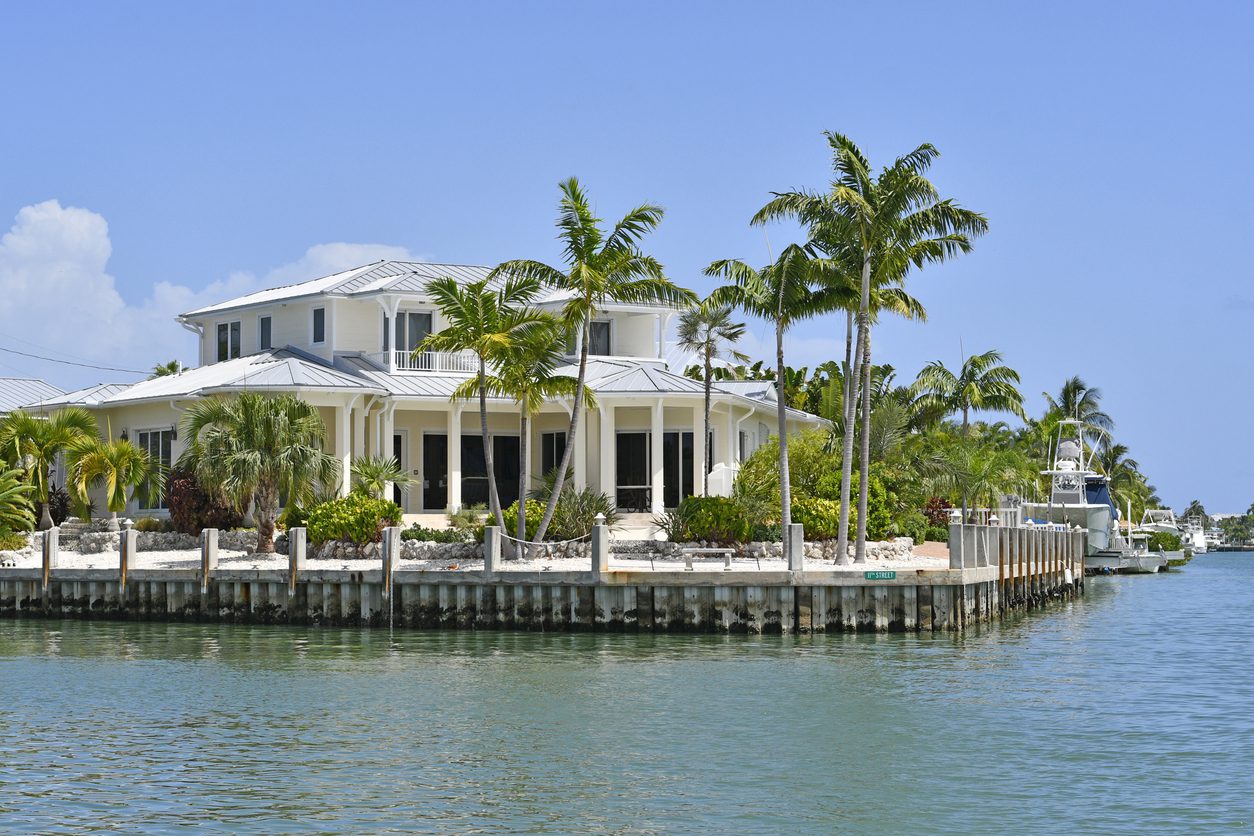
A waterfront lot can look perfect in a listing photo and still carry problems that no photo reveals. Shallow water that limits boating, unclear access rights, a boundary that does not mean what the buyer assumes, or a flood insurance quote that changes the whole budget can all surface after closing. Waterfront Lot Due Diligence helps buyers identify these issues while they still have leverage, and involving a Waterfront Custom Home Builder before the purchase can add valuable construction context to that review.
This guide covers the questions worth answering before you commit to a waterfront parcel: what water access actually means, how surveys define where your property begins and ends, what riparian rights and submerged-land considerations may apply, how water depth and navigation affect boating plans, how flood insurance and elevation shape the real cost of ownership, and how those findings can be turned into a realistic plan before a contract becomes binding.
Why Waterfront Lot Due Diligence Belongs in the Conversation Before Closing
Many buyers hire a builder only after they own the lot. By then the most expensive decisions have already been made. Reviewing a parcel during the contingency period can identify constraints that change what can be built, how much it may cost, and how long approvals could take.
This is not a substitute for a real estate attorney, licensed surveyor, environmental professional, or insurance agent. What an experienced builder adds is construction context: translating survey lines, setbacks, elevation data, site conditions, and marine features into a preliminary buildable footprint and realistic budget range.
That context helps buyers decide whether a lot fits their plans or whether a different parcel would serve them better.
Homeowners evaluating a waterfront property can also review Axelle Builders’ experience with waterfront custom home construction before committing to a site.
What Water Access Really Means for a Specific Lot
Waterfront is a broad label. A parcel may sit on open bay, a river, canal, lake, or another body of water, and each setting carries different benefits and limitations.
Open water can offer expansive views and breezes but greater exposure to wind and waves. Canal frontage may offer calmer conditions and convenient docking but can introduce limitations involving vessel draft, channel depth, bridge clearance, or the route to open water.
Access should be verified rather than assumed. A lot that borders water on paper may still face limitations on dock placement, vessel type, or practical navigation.
A careful review before purchase helps prevent the disappointment of buying a property that cannot support the boating or waterfront lifestyle the buyer pictured.
Surveys and Boundaries: Where the Property Actually Begins and Ends
A survey is the foundation of many waterfront decisions. A boundary survey identifies property lines, easements, and encroachments, while topographic information provides elevations that influence drainage and foundation design.
On waterfront parcels, the shoreline, seawall or bulkhead, easements, and applicable setback lines can all affect where a home and its outdoor improvements can realistically sit.
A current survey should be reviewed alongside the proposed building program so the buyer understands how those conditions influence the buildable area.
Older surveys can become less useful as site conditions, improvements, and shoreline conditions change. Updating the survey when necessary helps ensure design decisions rest on current information rather than assumptions from an outdated drawing.
Riparian Rights and Submerged Land Considerations
Owners of waterfront property can hold certain rights associated with access to adjacent navigable water, commonly described as riparian rights, but the scope of those rights depends on Florida law and the specific circumstances of the parcel.
Docks and other waterfront improvements can also involve submerged lands, existing authorizations, environmental permitting, or other governmental approvals.
A Waterfront Custom Home Builder should flag these questions during due diligence and encourage buyers to confirm legal rights with an attorney familiar with Florida waterfront property.
The practical point is simple: the existence of a dock today does not automatically mean a buyer can replace, enlarge, or redesign it exactly as expected.
Existing permits, authorizations, dimensions, and ownership conditions should be investigated before the purchase whenever marine improvements are important to the buyer’s plans.
Water Depth, Navigation, and Boating Reality
Boating plans depend on depth and access. Water that appears adequate at high tide may be too shallow at lower tides for a particular vessel, while bridges, channels, no-wake areas, and navigation routes can shape how practical the location is for regular boating.
If boating is an important part of the purchase decision, conditions should be evaluated at realistic operating depths and the route from the property to open water should be understood.
Depth can also influence dock design and cost. Shallow conditions may require different dock dimensions or raise questions about whether dredging or other work would be necessary and permissible.
Addressing these conditions early gives buyers a more realistic picture of what their intended waterfront lifestyle will actually require.
Flood Zones, Elevation, and the True Cost of Ownership
Waterfront parcels often carry significant flood considerations, and those affect much more than foundation design.
Flood zone, required elevation, foundation strategy, site grading, mechanical equipment placement, and insurance can all influence the true cost of developing and owning the property.
A buyer should obtain current flood information for the specific parcel and discuss insurance implications with a qualified insurance professional before closing whenever flood exposure materially affects the decision.
Early coordination helps prevent a land purchase from being evaluated solely on acquisition price while overlooking the site-development and long-term ownership costs created by flood conditions.
Existing Structures, Seawalls, and Hidden Site Conditions
A parcel with an existing home, dock, or seawall can offer value, but it also introduces additional due diligence.
Older seawalls may require repair or replacement, existing docks may not match current permit records, and drainage, soil, utility, or structural conditions may be difficult to evaluate from listing information alone.
Florida DEP’s current dock permitting guidance explains that new docks, repairs, replacements, and boat lifts can fall under different permitting or exemption pathways depending on the project. DEP also provides an online self-certification process for qualifying single-family dock projects.
State-owned submerged lands can introduce another layer. Florida DEP explains that sovereign submerged lands generally include certain lands beneath navigable or tidally influenced waters waterward of the ordinary or mean high water line, and activities using those lands may require proprietary authorization in addition to regulatory permitting.
This is also the time to consider whether renovation, replacement, or entirely new construction makes the most sense. Waterfront setbacks, elevation requirements, seawall condition, and existing structures can all influence that decision.
Turning Due Diligence Into a Realistic Plan and Budget
Once the facts are gathered, the next step is translating them into a preliminary plan. Start by identifying the realistic buildable footprint. Then estimate site work, elevation costs, and marine improvements. Build the project timeline around likely approvals. Avoid relying on an idealized construction schedule.
Florida DEP’s Environmental Resource Permitting program regulates many activities involving surface waters. The program also provides permitting pathways for single-family docks and related waterfront work. Its current guidance also distinguishes between regulatory permitting and authorization to use state-owned submerged lands where applicable.
Honest ranges are more useful than precise-sounding numbers built on incomplete information. A strong Waterfront Lot Due Diligence process should clearly identify what is known, what still needs verification, and which unresolved conditions could materially change the budget or schedule.
Questions to Ask a Waterfront Custom Home Builder Before You Buy
Ask whether the builder will review a parcel during the contingency period and exactly what that review includes.
Ask how water depth, practical access, surveys, flood conditions, dock permits, seawalls, and buildable area will be evaluated. Also ask how the builder works with surveyors, attorneys, engineers, environmental professionals, and insurance agents when specialist input is needed.
For docks and submerged-land questions, Florida DEP directs waterfront owners to the appropriate district office and provides permitting resources for residential dock projects.
Ask how preliminary site work, foundation, elevation, and marine costs will be estimated before final design.
A builder with genuine waterfront experience should be able to explain which conditions can be evaluated confidently before purchase and which require additional professional or agency review.
Frequently Asked Questions About Waterfront Lot Due Diligence
Should I talk to a builder before I buy a waterfront lot?
Yes, ideally while the purchase agreement still provides an appropriate due diligence or contingency period.
A builder can identify constraints that affect the property before you commit to the purchase. These may include buildable area, construction costs, marine work, elevation, and project timelines. Early review gives you time to investigate further, negotiate terms, or reconsider the purchase.
What kind of survey do I need for a waterfront parcel?
The appropriate survey depends on the property and proposed project, but current boundary and elevation information is often important for waterfront design.
A licensed surveyor should determine the correct scope. The builder can then use that information to understand how property lines, easements, shoreline conditions, elevations, and setbacks affect the proposed home.
Do I automatically get to rebuild an existing dock?
Not necessarily.
DEP’s permitting system recognizes different pathways for building, repairing, or replacing single-family docks. Some projects may qualify for exemptions. Others may require permits or submerged-land authorization. Verify the property’s permit history and proposed dock design early. Do not assume you can rebuild an existing dock in the same form.
How does water depth affect my boating plans?
Water depth affects vessel draft, dock configuration, and whether a property provides reliable boating access throughout normal tidal conditions.
Buyers should consider not only depth beside the lot but also bridges, channels, navigation routes, and access to the waterways they actually intend to use.
How do flood zones affect the cost of owning a waterfront home?
Flood conditions can affect required construction elevation, foundation design, equipment placement, site work, and insurance.
Costs vary by parcel and proposed home. Therefore, review flood information and insurance estimates before closing. Do not wait until design begins to address these costs. Early review can give you a clearer picture of the property’s overall financial requirements.
Building Waterfront With Axelle Builders
Axelle Builders has spent more than 36 years designing and building custom homes across Southwest Florida’s waterfront communities. As a Waterfront Custom Home Builder, we can evaluate a parcel before purchase. Our team can review survey information, flood conditions, marine features, and site constraints. This helps create a more realistic picture of what the property can support.
Waterfront Lot Due Diligence is most valuable before a buyer becomes committed to assumptions about the site. Assess the buildable footprint, boating access, existing structures, and permitting requirements early. Estimate likely site costs before comparing properties. This approach helps you judge each property by its true development potential, not just its listing appeal.
If you are comparing waterfront lots or builders, ask each one how they evaluate a parcel before discussing floor plans.
Considering a waterfront property and want an experienced team to help evaluate its construction potential before you commit? Contact Axelle Builders or call (941) 713-2303 to schedule a consultation.
Axelle Builders, 1960 Stickney Point Rd Suite 206, Sarasota, FL 34231. Serving Sarasota, Siesta Key, Longboat Key, Casey Key, Manasota Key, Anna Maria, Holmes Beach, St. Pete Beach, Fort Myers, and the surrounding Southwest Florida coast.